Maintenance
Part of Judging historic home materials: four properties that decide every repair
Historic Home Materials Maintenance by Season
A historic home materials maintenance routine by season, with masonry, metal and wood checks, repair priorities, coating care, and safe-cleaning guidance.
What to take away
- Upkeep is material-specific. The routine that protects bronze will damage sandstone.
- Cleaning is a preparation step, not a treatment. Cleaning before a repair is done to a defined standard, not to make things look nice.
- Inspect metal coatings annually and renew them when the coating shows wear; exposure determines how soon that happens.
- Write the routine down by material and by season, then actually follow the short version.
This historic home materials maintenance routine treats an old house as half a dozen material systems sharing a wall. Each one wants something slightly different, and the differences are what this article is about.
Masonry
Keep it dry and leave it alone. The main annual tasks are checking joints for open or eroded mortar, clearing vegetation from the wall face, confirming that rainwater discharges away from the base, and looking for salt bloom or spalling.
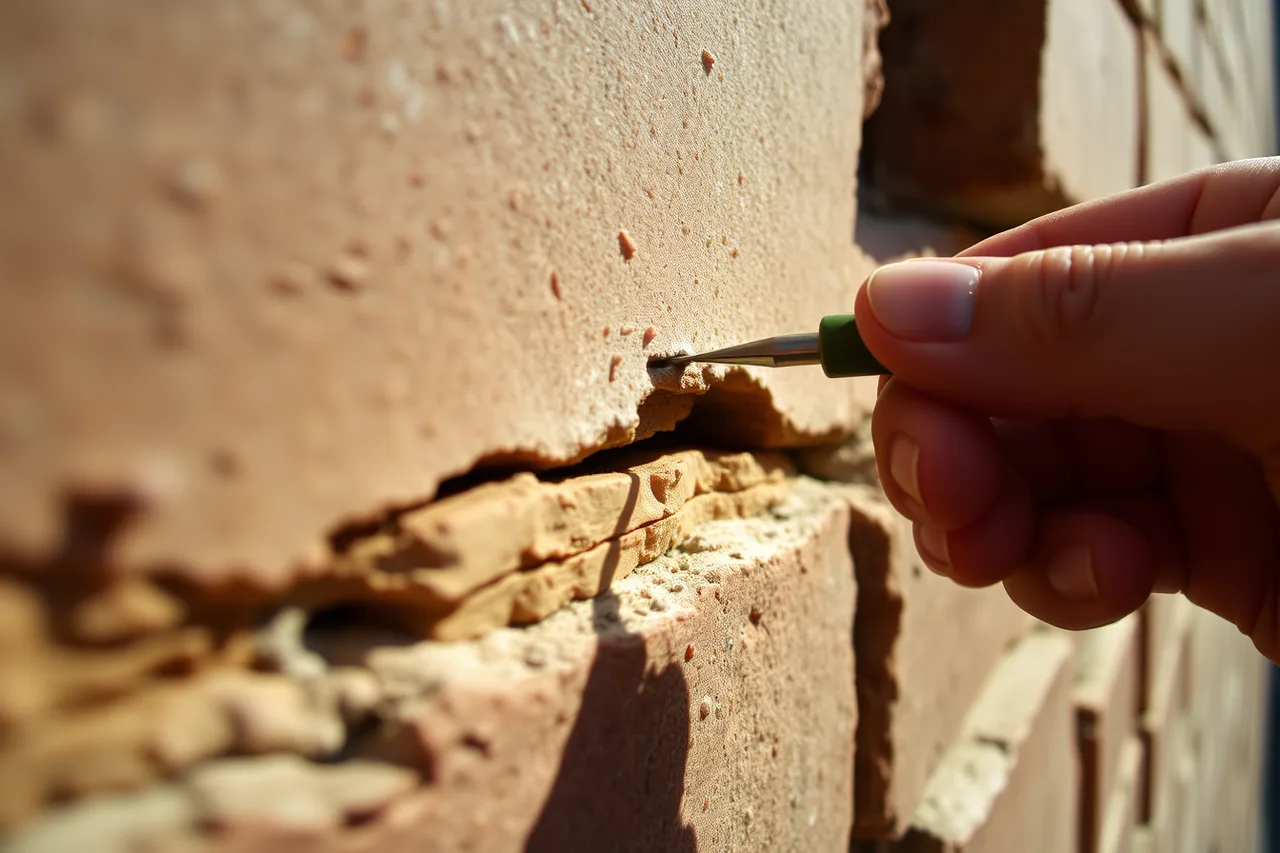
Cleaning masonry is no routine task, and where it is truly needed, it is a controlled operation. The federal buildings service treats even preparatory cleaning as a specified procedure.
The General Services Administration's (GSA) Historic Preservation Technical Procedure on removal of soiling from sandstone before repointing shows the care expected on soft, absorbent stone. The default on masonry is the gentlest method, tested first, and only where there is a reason.
Metals
| Metal | Routine care |
|---|---|
| Cast and wrought iron | Watch for coating failure at joints, treat rust early |
| Bronze and brass | Clean gently, renew the protective coating on schedule |
| Copper and lead | Leave the patina, check seams and fixings |
| Galvanized steel | Watch for coating loss at cut edges and fixings |
| Zinc ornament | Fragile with age, handle minimally |
Bronze doors, handrails, letter boxes and hardware are common in older houses and are routinely wrecked by aggressive polishing. GSA's Historic Preservation Technical Procedure for cleaning and applying protective coatings to bronze architectural elements treats the protective coating as the maintained item rather than the metal itself.
Wood
Wood care is really water care. Keep paint sound at end grain, joints and horizontal surfaces, which are where water gets in. Check the bottoms of doors, the ends of siding boards, porch posts sitting on damp masonry, and any wood within a few inches of soil.
Repaint on a cycle rather than waiting for failure. Repainting sound paint is far cheaper than stripping failed paint and repairing the wood beneath it.
There is no universal repaint interval: cycle length depends on exposure, not the label. Inspect paint each spring. South and west elevations, plus anything above a roof that reflects heat and light, need attention years before the shaded north side.
Treat the house as separate paint jobs on separate clocks. Booking a painter runs on its own clock: weather-dependent trades fill their calendars a season ahead.
Coatings and finishes
- Test any new product on a small area before using it on a whole element.
- Keep a record of what was used where, with dates.
- Prefer coatings that can be maintained and recoated over ones that must be stripped.
- Never apply a new coating over a failing one and hope.
- Choose a compatible corrosion-inhibiting primer and exterior topcoat for iron, compatible exterior paint for wood, and the clear protective coating specified by GSA's bronze procedure. Test compatibility with the existing finish before broad application.
Season-by-season routine
- Spring — inspect and record:Check masonry joints, vegetation, drainage, salt bloom and spalling. Look for rust or coating failure on iron, wear to bronze and brass coatings, and damage to copper, lead or zinc. On wood, inspect paint at end grain, joints and horizontal surfaces.
- Summer — repair:Address failed masonry joints after checking the water source; only clean where necessary, using a tested gentle method. Treat rust and coating failure on iron, clean bronze gently and renew its coating if worn, and repair vulnerable wood before repainting sound, prepared surfaces.
- Autumn — protect:Confirm rainwater discharges away from masonry and the base of the house. Check that metal coatings and wood paint are sound before winter, and make any needed coating repairs using compatible materials.
- Winter — watch:After storms, look for water entry at masonry, wood joints and metal connections. Record leaks, new spalling, rust or coating damage so they can be addressed in the next repair season.
For an identification framework, see What to Look for When Reviewing Historic Home Materials. For examples of recurring failures and repairs, see Historic Home Restoration Problems and Fixes.