Maintenance
Part of 5 details of historic home restoration people miss
4 lessons worth learning about historic home restoration
Historic home restoration: the failures that show up again and again in old houses, what causes each one, and which repairs a homeowner can do without making things.
What to take away
- Almost every serious old-house problem is a water problem wearing a disguise.
- Name the failure precisely before buying a product. Spalling, sugaring and efflorescence have different causes and different fixes.
- Hard cement mortar and impermeable coatings damage soft historic masonry, sometimes within a few freeze cycles.
Old houses fail in patterns. Recognizing the pattern is most of the repair, because the wrong diagnosis leads straight to a product that makes the problem worse.
Water, and everything water causes
Trace the path before touching the damage. A wet plaster ceiling may be a roof leak, a flashing failure, a plumbing joint, or condensation from an unvented bathroom, and each repair differs.
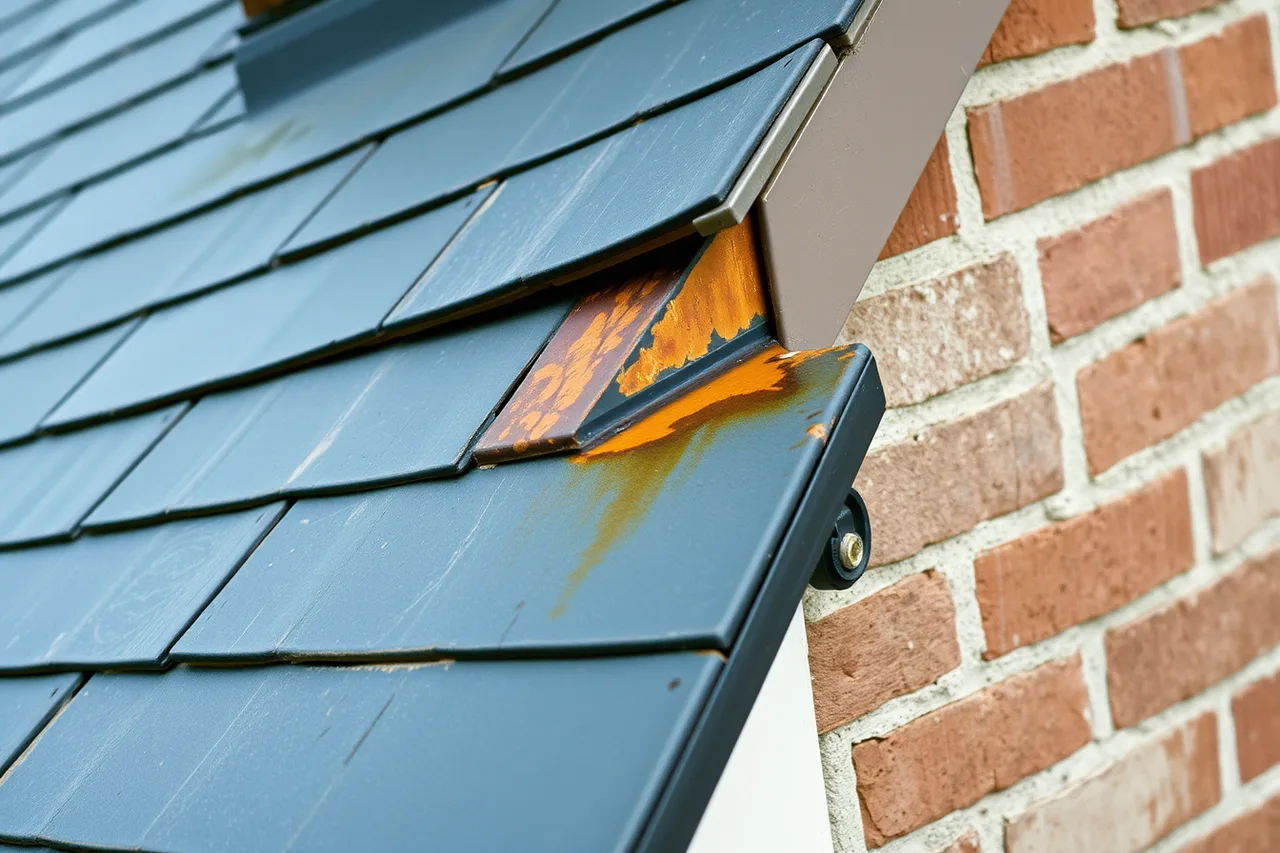
A ceiling stain below a roof-to-wall junction often traces to failed step flashing. Probe the stain, then follow the moisture uphill.
If the stain sits under a roof valley or chimney, the flashing is the likely source. Repair the flashing first, let the sheathing and plaster dry, then patch the ceiling. NPS Preservation Brief 4, Roofing for Historic Buildings, covers flashing details.
Work outward from the stain to the highest point of moisture, then upward. The most common findings are blocked or undersized gutters, downspouts discharging at the foundation, negative grade, and failed step flashing where a roof meets a wall.
Fix the source first, let the assembly dry, and only then repair the finish. Plaster patched over a live leak fails again, and now the second failure has a fresh surface to stain.
Masonry problems, named correctly
| What you see | Common cause | Sensible response |
|---|---|---|
| Face of brick popping off | Hard repointing mortar or a sealer trapping moisture | Fix the water path, repoint with a softer mix |
| White powder on the surface | Salts carried out by moisture | Find the water path, brush dry, do not seal |
| Crumbling stone surface | Salt cycling, poor drainage, harsh cleaning | Reduce water, gentlest effective cleaning |
| Open, sandy joints | Age and weather | Repoint to match the original in strength and profile |
For soft historic brick, a typical repointing mortar is 1 part portland cement, 2 parts hydrated lime, and 8 to 9 parts sand by volume. Test the mix against the original before full repointing. Avoid siloxane and acrylic sealers on historic masonry unless a preservation architect specifies one.
Typical U.S. planning ranges, which vary by market and scope:
| Work | Typical range | What drives it |
|---|---|---|
| Repointing historic brick | $12 to $40 per square foot | Mortar match, joint profile, access, height |
| Plaster repair | $300 to $1,200 for a small ceiling patch | Lath condition, keys, finish match |
| Step flashing repair | $400 to $1,200 | Roof pitch, access, extent of rot |
| Window restoration | $500 to $1,500 per window | Sash condition, glazing, paint removal |
These are typical ranges, not quotes. Get three local bids.
The vocabulary matters enough that the Park Service publishes a full glossary of masonry deterioration terms with photographs. Using the right word gets a far better answer from a mason. The repointing decision that follows has a cost shape worth knowing in advance, since mortar, roofing and siding price very differently once upkeep is counted.
Wood, plaster and paint
Peeling paint on exterior woodwork usually points to moisture, not paint quality. Repainting without fixing that moisture buys one season. For peeling paint, scrape loose paint, find and fix the water path, let the wood dry, then prime with an oil-based primer and repaint. NPS Preservation Brief 10, Exterior Paint Problems on Historic Woodwork, covers this sequence.
Interior plaster cracks fall into two groups: hairline settlement cracks return seasonally, while cracks with movement or loose keys behind them need repair, not filler.
For hairline cracks, widen the crack slightly, wet it, fill with a setting-type joint compound, and let it cure before painting. Cracks with movement or loose keys need a plasterer. NPS Preservation Brief 21, Repairing Historic Flat Plaster: Walls and Ceilings, gives the full method.
Sagging floors in an old house are common, but sudden new movement is not, and that difference is worth an engineer's visit.
Dry rot and insect damage hide in the same places every time. Probe sill plates behind splash-back, band joists under a leaking hose bib, porch posts sitting flat on wet concrete, and the bottom rails of doors with an awl once a year.
Sound wood resists the point; decayed wood takes it without effort. Sash fails the same way in the same places, which is why decay prevention at the sill and lower rail belongs in a window schedule rather than at the end of one.
Choosing a repair that lasts
- Remove the cause before repairing the effect.
- Match the original material's strength, permeability and profile rather than exceeding it.
- Prefer reversible repairs where the outcome is uncertain.
- Repair the smallest area that solves the problem.
The Park Service organizes its technical guidance by building element, and its preservation topic index is the fastest way to find the right document for roofs, windows, porches or interiors.
For how these repairs fit into a whole-house sequence, see Historic Home Restoration: A Practical U.S. Guide for 2027 the restoration guide. For putting the work out to bid, see the hiring checklist, which lists insurance, scope, and payment terms the questions to ask a restoration contractor.