Features
Part of Judging historic home materials: four properties that decide every repair
Historic home materials by region: what survives where
A practical look at historic home materials by region: what local climates punish, which materials fail where, and how solar and green roofs fit an old house.
What to take away
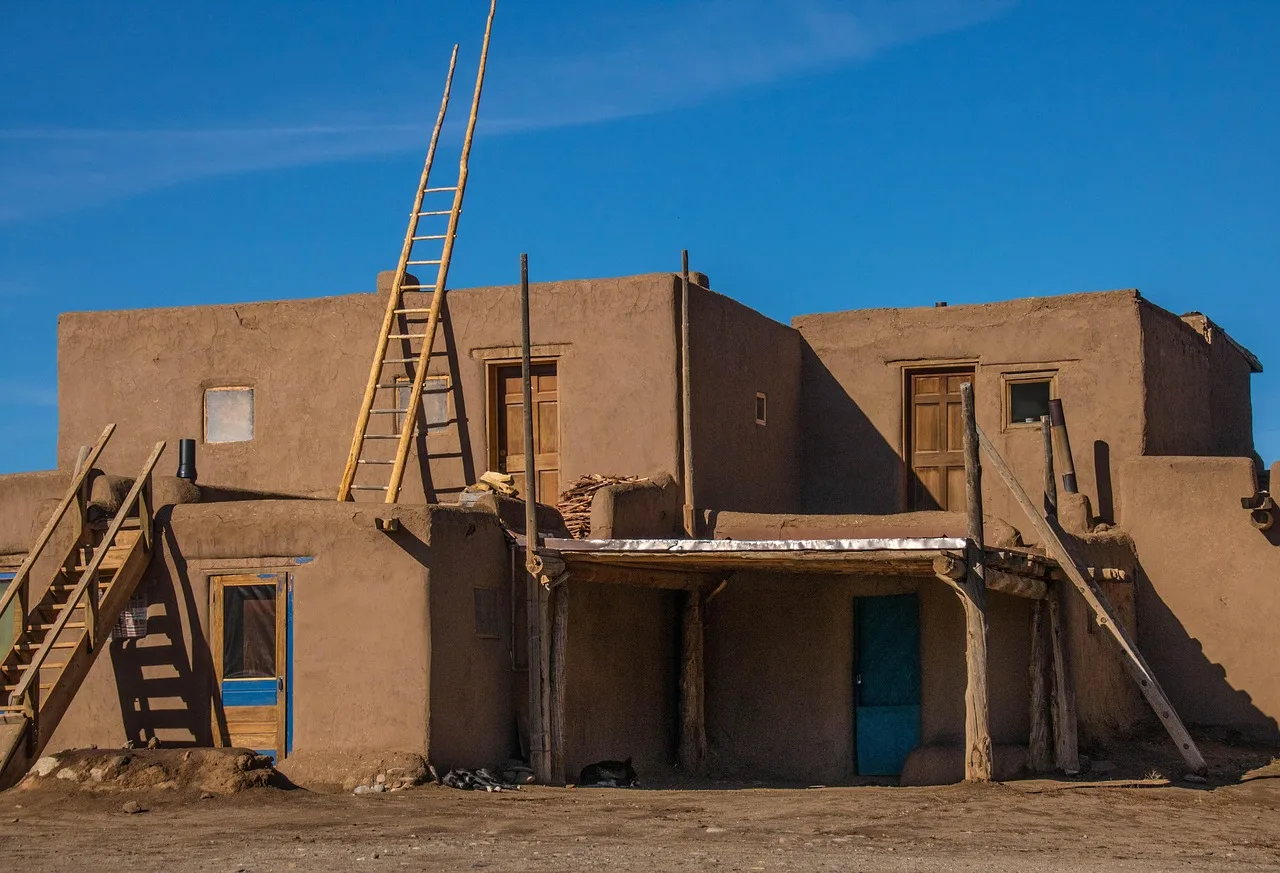
- Historic home materials by region follow local climateadobe in the Southwest, tabby along the Georgia and South Carolina coast, heart pine and cypress in the South, slate in the Northeast. Where a regional choice looks odd, it usually had a reason.
- Freeze-thaw regions punish water trapped in brick, stone and plaster, and hard cement repairs over soft lime mortar; hot, humid regions punish anything that traps moisture, from elastomeric paint over brick to a sealed crawlspace with no drying path.
- Solar is usually compatible with an old house when the array is out of sight from the ground.
- Green roofs are a structural decision before they are a planting decision, and old roofs were not designed for the load.
Materials that perform well in one climate fail in another. Old buildings mostly got this right, because they were built from what was nearby by people who watched what lasted.
Read the local tradition first
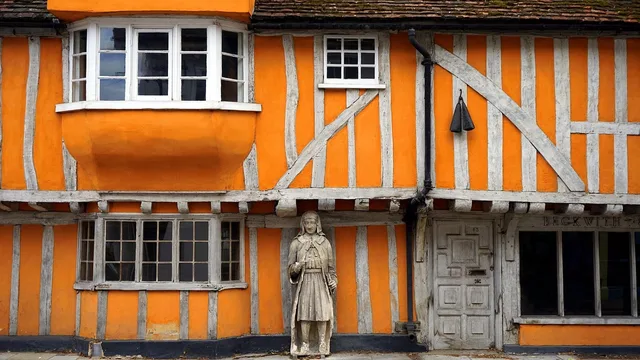
Deep porches and cypress siding across the humid South, from Charleston and Savannah to New Orleans. Steep roofs shedding snow in New England and the upper Midwest, often under slate. Adobe and thick stone walls where summer heat needs a thermal buffer, in Santa Fe and Tucson. Wide eaves and stucco over masonry where driving rain is common, along the Gulf Coast.
Before choosing a material, see what survives in old buildings within a few miles. Also check which details on your own house are original.
Publicly accessible historic buildings make that easiest, and looking at maintained historic fabric up close trains the eye for everything that follows.
Where a regional detail seems inefficient, ask what problem it was solving before removing it.
The two failure directions
What punishes materials
- Cold, freeze-thaw
- Water in absorbent material, then ice
- Hot, humid
- Trapped moisture and condensation
- Hot, dry
- Ultraviolet exposure, thermal movement
- Coastal
- Salt and wind-driven rain
- Wildfire exposed
- Ember entry at vents and gaps
Implication
- Cold, freeze-thaw
- Keep masonry dry, avoid hard repairs and sealers
- Hot, humid
- Keep assemblies breathable, control indoor humidity
- Hot, dry
- Coatings degrade fast, allow for expansion
- Coastal
- Corrosion-resistant fixings, frequent inspection
- Wildfire exposed
- Screening and detailing, not just material choice
Two rules cover most of it: do not add a harder or less permeable material than what is there — no Portland cement mortar repointed over lime mortar, no cement patch over soft brick or stone, no elastomeric paint over brick, limewash or stucco — and fix water paths before changing anything else. Where a limewash or linseed oil paint finish degrades fast, the answer is a shorter maintenance cycle rather than a tougher product, and exposure rather than the label sets that cycle.
Climate failure directions
Climate
- Cold, freeze-thaw
- Water in absorbent material, then ice
- Hot, humid
- Trapped moisture and condensation
- Hot, dry
- Ultraviolet exposure, thermal movement
- Coastal
- Salt and wind-driven rain
- Wildfire exposed
- Ember entry at vents and gaps
What punishes materials
- Cold, freeze-thaw
- Keep masonry dry, avoid hard repairs
- Hot, humid
- Keep assemblies breathable, control humidity
- Hot, dry
- Coatings degrade fast, allow expansion
- Coastal
- Corrosion-resistant fixings, frequent inspection
- Wildfire exposed
- Screening and detailing, not just material
Implication
- Cold, freeze-thaw
- Hot, humid
- Hot, dry
- Coastal
- Wildfire exposed
Which historic materials fail where
- Lime mortar and limewash.Forgiving nearly everywhere because they stay vapor-open and move with the wall. They fail when a later repointing with Portland cement mortar or a coat of elastomeric paint seals the face and traps water behind it.
- Brick, stone and gypsum plaster.They survive cold and dry climates as long as water can escape; freeze-thaw damage usually starts under a hard repair laid on a softer, older surface.
- Slate, clay tile and wood shingles.Slate and terra cotta shed water and last longest on the steep roofs of the Northeast, while wood shingles and shakes suit New England and the Pacific Northwest, where air moves around them and they dry between rains.
- Adobe and stucco.Built for the dry Southwest, where they dry out quickly after rain. In the humid South and on the Gulf Coast, stucco over masonry holds moisture unless the finish stays breathable and lime-based.
- Heart pine, cypress and tabby.The dense Southern woods, used for clapboard, siding, flooring and structural timber, and the oyster-shell concrete of the Georgia and South Carolina lowcountry tolerate heat, humidity and salt air that rot softer modern lumber.
- Metal, flashing and fixings.Copper and lead were the historic choices and outlast most substitutes; galvanized steel and ordinary iron corrode fastest in coastal salt air, where corrosion-resistant hardware matters most.
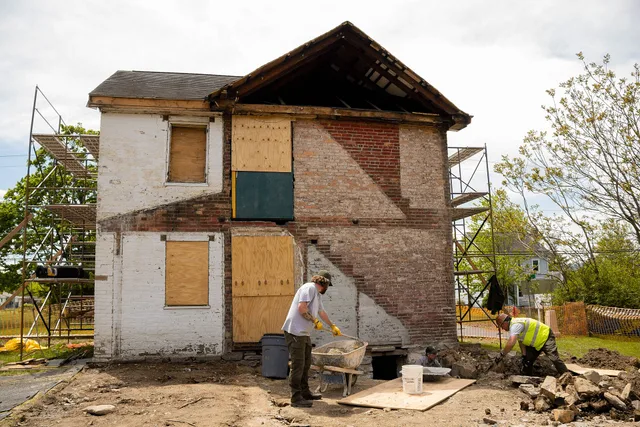
Where something has already failed, the replacement follows the same logic: lime mortar instead of Portland cement, limewash or mineral paint instead of elastomeric paint, soft brick or stone instead of hard cement patching.
Solar on an old house
Solar is one of the more common climate-driven additions. It is more compatible with historic buildings than owners expect.
The National Park Service states its position plainly in its guidance on solar panels on historic properties. An installation not visible from the ground will generally meet the Secretary of the Interior's Standards for Rehabilitation. One that harms historic character will not.
That gives a practical design brief. Rear slopes, flat roofs behind parapets, additions, outbuildings and ground-mounted arrays are the places to look first. Front elevations and prominent slopes are where the argument gets difficult.
Green roofs and the load question
The National Park Service overview of green roofs on historic buildings covers the visual and physical considerations, including the waterproofing layer beneath and the structural implications.
For a house, the honest answer is usually that the roof structure was never designed for saturated growing medium. That is a structural engineer's question, asked before anything else.
Deciding in your own climate
Ask what the material does when it gets wet, what it does when it dries, and how long it lasts where you live. Lime mortar, limewash, slate and heart pine answer those questions very differently from Portland cement, elastomeric paint and modern softwood. The identification framework is in what to look for when reviewing historic materials, and the interior version of the same regional question is in how climate changes the choices for period interiors.