Features
Part of Plaster wall repair: how it works and why repair comes first
Plaster wall repair by region: freeze-thaw, humid, floods
Plaster wall repair by region: how freeze-thaw, humid summers and flooding change the materials, coatings and drying checks for historic plaster walls.
What to take away
- Plaster on a solid masonry wall behaves differently from plaster on a framed wall, and climate decides how much that matters.
- Wet plaster is not automatically lost plaster. Drying slowly and completely is usually the right first move.
- In flood-prone areas, decide in advance which finishes you are willing to lose and detail the rest to dry out.
- Salt is the hidden enemy on masonry walls. It arrives with water and stays after the water leaves.
Plaster wall repair by region starts with where you live: it changes the moisture path through your walls, and plaster sits at the end of that path. The same repair can be right in one climate and a mistake in another.
Cold climates and freeze-thaw walls
On solid masonry buildings in cold regions, water absorbed by the wall freezes near the outer face and the pressure works outward. Interior plaster on those walls shows the results as damp patches, salt bloom and loss of adhesion in the same places each winter.
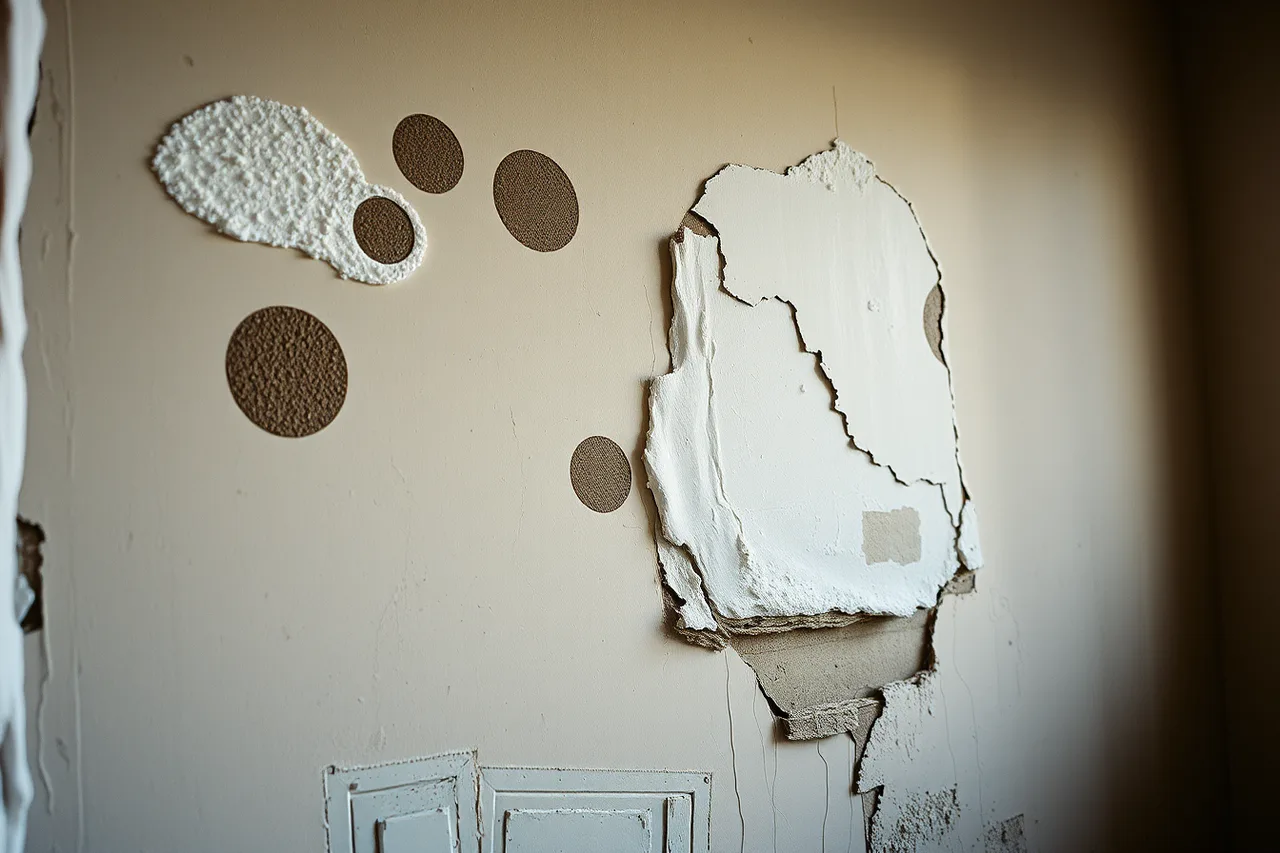
Adding insulation to the inside face of such a wall makes the masonry colder and wetter. Insulation decisions have to be taken with the whole assembly in mind. The plaster is where the consequences appear first, and the year after a repair is a diagnostic period rather than a finished job.
The fix in a freeze-thaw climate is a breathable wall: repoint and repair with lime mortar — lime putty or natural hydraulic lime (NHL) — rather than Portland cement, keep exterior coatings vapor-permeable, and never add an interior vapor barrier behind plaster on a solid masonry wall. Cement render and elastomeric or vinyl paint trap water in the masonry and push the freeze-thaw damage deeper into the wall. New England and the upper Midwest see this cycle hardest.
The National Park Service's illustrated sustainability guidelines for historic buildings treat these interactions at length and are the right reading before any interior insulation work behind plaster. Preservation Brief 39, Holding the Line: Controlling Unwanted Moisture in Historic Buildings, covers the same problem from the owner's side. Both are free from the Park Service's Technical Preservation Services.
Humid climates and summer condensation
In hot, humid regions the wall is often coldest on the inside during summer, and moisture condenses behind furniture and inside closets on external walls. Vapor-tight wall coverings and hard modern coatings hold that moisture against the plaster.
- Use limewash or a mineral (silicate) paint on exterior-wall plaster instead of acrylic, vinyl or cement-based paint.
- Keep furniture slightly off external walls to allow air movement.
- Control humidity as well as temperature; run the cooling system long enough to pull moisture out of the air, or use a dehumidifier in closets and closed rooms.
- Repair with lime putty or NHL mortar, nothing denser or harder than the original.
Plaster that has been wet
| Situation | Usual outcome |
|---|---|
| Clean water, dried within days | Often recovers fully |
| Prolonged wetting, keys intact | Dry slowly, then assess adhesion |
| Wetting plus contamination | Removal of affected areas is likely |
| Repeated wetting over years | Keys usually gone, rebuild required |
The instinct after a flood is to strip everything immediately. That is sometimes right and often premature. In a flood-prone house the decision is better made in advance, since foreseeable hazards deserve a budget line before they arrive.
Flood-prone areas include coastal communities from the Gulf and Atlantic coasts, river towns along the Mississippi and its tributaries, and low-lying areas nationwide. The National Park Service's Guidelines on Flood Adaptation for Rehabilitating Historic Buildings sets out how to plan for water in buildings that will be wetted again, including which materials to select where flooding is foreseeable. FEMA's National Flood Insurance Program and your local floodplain administrator set the insurance and permitting rules, and any landmark or historic district commission reviews changes to a designated building, so check all three before demolition.
Salts, and why they keep coming back
Water moving through masonry carries dissolved salts, and evaporation at the plaster surface leaves them behind. The usual culprits are chlorides from de-icing salt and sea air, and sulfates and nitrates from soil and groundwater. They crystallize and push the finish off. Wiping the bloom away treats the visible part and nothing else.
The repair sequence is to stop the water, allow a long drying period, remove contaminated plaster where it must go, and use a repair mix compatible with the wall. Where salts are heavy, a lime poultice or compress—commonly diatomaceous earth, clay, or paper pulp poultices—on the masonry can draw them out (the desalination step), and it may need repeating before new plaster goes back. Specify a mix in the same strength and permeability as the original, never a hard cement one.
Owners in dry climates—the Southwest and High Plains, for instance—face the opposite problem: months of very low humidity open joints and crack finish coats along lath lines. Stability again matters more than any single number.
Preservation Brief 21, Repairing Historic Flat Plaster—Walls and Ceilings, is the standard reference on the mechanics of each repair, and it is free from the National Park Service. Our plain-English guide to plaster repair walks through the same ground for owners. Climate and period interiors addresses parallel questions.