Features
Twenty period interior ideas for an old house, sorted by how much change they require
Twenty period interior ideas for an old house, sorted into three tiers from reversible repairs to larger moves, plus a room by room guide to where each belongs.
What to take away
- Sort ideas by how much original material they consume, then start at the cheap, reversible end.
- The character of a finished interior lives in trim profiles, door hardware, plaster texture and floor pattern, not in furniture.
- Secondary rooms carry most of the change in a well-planned interior. Front rooms carry the least.
- Anything that removes an original finish deserves a written reason and a photograph first.
Period interiors go wrong in two directions: over-restoration into a stage set, and casual erasure of the details that made the room worth keeping. The first direction has a familiar shape, since adding a history the house never had ages badly and rarely convinces anyone. These twenty ideas are grouped by cost to the building rather than cost to you.
Reversible, low risk
- Repair rather than replace door and window hardware, then clean it rather than replating it.
- Return a painted-over transom to working order.
- Reinstate picture rail and hang from it instead of driving hooks into plaster.
- Match a historic paint sheenflat on ceilings, higher gloss on trim.
- Use unlined curtains or shutters instead of heavy modern treatments.
- Add discreet supplementary lighting rather than recessing fixtures into original ceilings.
- Restore a boarded fireplace opening to a legible, non-working hearth.
- Replace hollow-core doors in secondary rooms with salvaged panel doors of the right period.
- Lay area rugs over worn floors rather than sanding them thin.
- Rehang shutters on their original hinges.
Moderate, still recoverable
- Patch and skim damaged plaster rather than covering it with drywall.
- Repair a worn stair tread with a dutchman rather than replacing the tread.
- Rebuild a missing chair rail or base molding from a surviving profile elsewhere in the house.
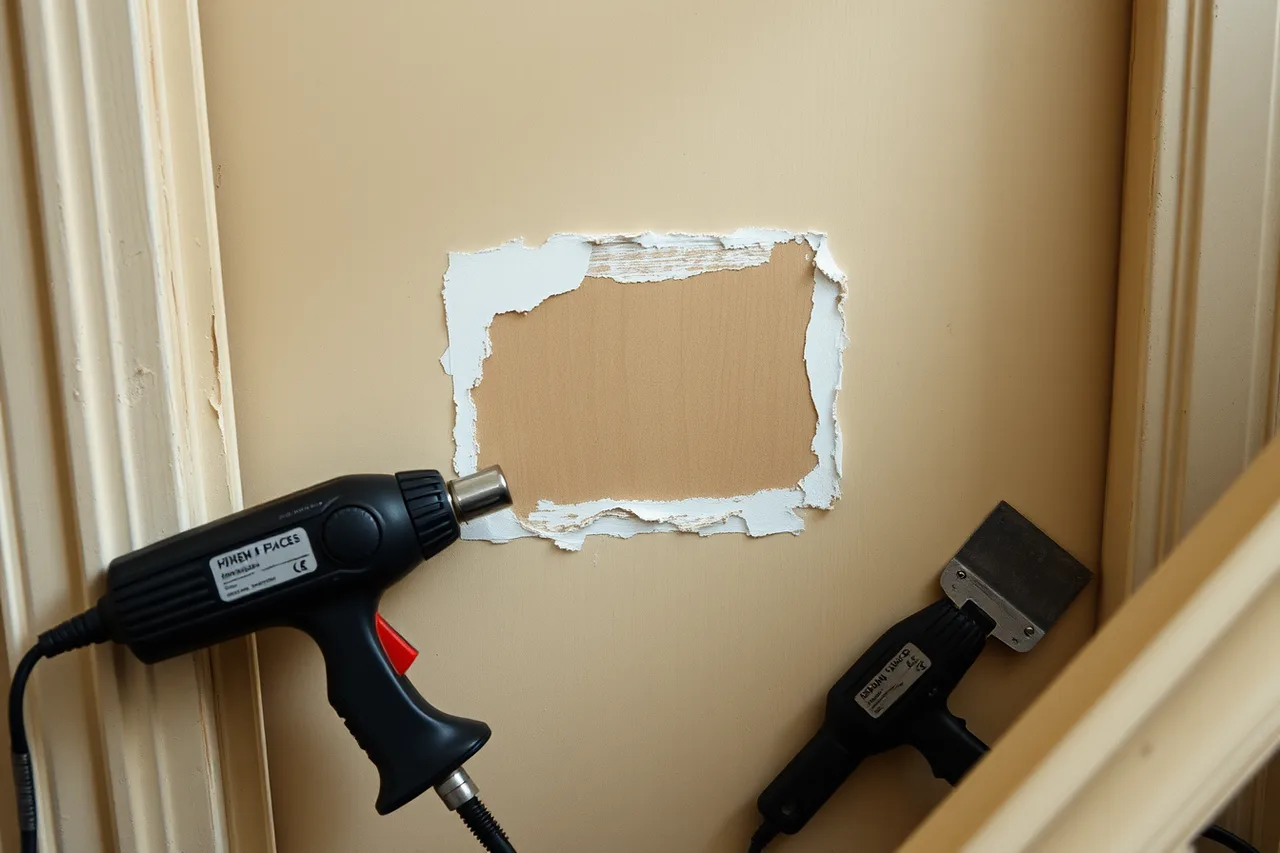
- Strip a single test area of paint to find the original woodwork finish before deciding on a scheme.
- Reintroduce a wallpaper frieze where a ghost line proves one existed.
- Convert a back bedroom to a bathroom rather than carving one out of a front room.
The test area on that list is the one to do first, because woodwork painted from new loses its evidence the moment it is stripped.
Larger moves, weigh carefully
- Subdivide a large secondary space with a partition that stops short of the ceiling cornice.
- Insert built-in storage scribed to existing trim.
- Open a doorway between two service rooms.
- Replace a failed twentieth-century kitchen entirely, since almost nothing there is original anyway.
Federal guidance treats this hierarchy explicitly. The Park Service bulletin on altering the character of finished interiors shows how small cumulative changes flatten a room, and its companion guidance on changing secondary interior spaces sets out how much more freedom those back rooms actually allow.
The pattern in that hierarchy is worth stating plainly. Change concentrated in the back half of a house is usually invisible from the front rooms and from the street, which is where both the character and the resale argument live.
Where each idea belongs
| Room | Appetite for change |
|---|---|
| Entry, stair hall, front parlor | Lowest, keep and repair |
| Dining room, principal bedrooms | Low, reversible changes only |
| Back bedrooms, service rooms | Moderate |
| Kitchen, bathrooms, laundry | Highest, usually already altered |
| Attic, basement, additions | Highest, subject to code |
Which of these repay the effort in daily life is covered in our look at the upgrades that add everyday value, and how these decisions relate to formal treatment choices appears in the four treatments compared.
Common questions
Do I have to match one period exactly?
Is stripping woodwork always an improvement?
Should I use reproduction wallpaper?
What about modern lighting?
In this guide
- Which period interior upgrades you notice every day, and which you stop noticingA ranking of period interior upgrades by daily use: floors, doors, storage, lighting, acoustics and plaster, plus the decorative work you stop noticing.
- Caring for a restored period interior once the first year passesA seasonal upkeep routine for restored period interiors: woodwork, plaster, floors, stone and hardware, with the cleaning mistakes that undo good work.
- Why climate changes the right period interior choices by region?Period interior ideas by region: how moisture in the wall decides finishes in a humid South, a cold North and a dry Southwest, and why the answer changes.
- 4 things that decide period interior products worth testingProduct categories worth sample-testing in a period interior, and the test protocol to use, since no brand here has been tried on a real old house.
- Period interior projects: the five lessons that keep repeatingFive lessons that repeat in period interior work, from exposed brick and stripped woodwork to lighting, paint sequence and the value of a finish record.