Features
Part of Preservation contractors: nineteen trades and how to find them
How to get a preservation contractor interested in a small job
How to get specialist help for small repairs: batching work, off-season timing, shop jobs, day rates, and doing the preparation a specialist should not.
What to take away
- Batch small jobs into one visit. Mobilization is the cost that makes a small job uneconomic, not the work itself.
- Ask about the off season. Specialists often have gaps that a small, flexible job fits perfectly.
- Shop work travels. A sash, a door or a piece of hardware can go to a craftsman a long way away.
- Offer to do the preparation and the cleanup yourself, and say so in the first call.
Preservation contractors turn down small jobs for a simple reason: a half-day of work with two hours of travel and a setup is a losing day. Two numbers decide whether the trip is worth it — what a day of the firm's time costs, and how much of that day goes to travel and setup — so ask about both early. Almost every tactic below is about fixing that arithmetic rather than persuading anyone.
Batch, then ask
Walk the house and list every job that needs the same trade, however small. Six masonry items in one visit is a day's work; one is an errand. The same applies to carpentry, plaster and painting.
One job vs. batched jobs
One job
- Effort
- An errand
- Mobilization
- Full cost
- Appeal
- Low priority
Six jobs
- Effort
- A day's work
- Mobilization
- Spread across work
- Appeal
- Worth the trip
Put the list in an email with photographs and measurements, and say that dates are flexible. Flexibility is worth real money to a firm juggling weather-dependent work, and a well-organized enquiry stands out in an inbox full of vague ones.
Small tasks are still specified tasks
A small job is not a lesser job, and the good ones have written methods behind them. Two examples from federal practice make the point. Removing a rust stain from stonework has its own procedure, and the General Services Administration (GSA) publishes Poulticing Rust Stains from Limestone and Marble as one of its Historic Preservation Technical Procedures, because the wrong approach etches the stone permanently.
The same is true of metalwork. GSA's Cleaning Copper Alloy Architectural Features covers a task that might take an afternoon and still needs the right method. Naming the procedure when you call signals that you are a client worth the trip.
Where to find a preservation contractor
If you do not already have one, start with the registers rather than a search engine. Your State Historic Preservation Office (SHPO) reviews work on historic buildings and keeps lists of the contractors and consultants who do it; the Preservation Trades Network connects owners with craftspeople who work in the traditional trades; and the National Trust for Historic Preservation and its local partners can point you to firms in your area. A preservation trade program is another route — the North Bennet Street School in Boston, for instance, teaches preservation carpentry and keeps up with where its graduates went.
Vetting is where a small job can go wrong. Ask whether the firm works to the Secretary of the Interior's Standards for Rehabilitation, whether it follows the National Park Service's Preservation Briefs for methods, how it handles mortar matching and repointing, and for two or three references from jobs like yours. A contractor who talks about matching historic mortar and making repairs that can be undone later is speaking the right language.
Ways to make a small job attractive
| Tactic | Why it works |
|---|---|
| Batch several items into one visit | Spreads mobilization across more work |
| Offer flexible dates, including off season | Fills gaps in a weather-driven schedule |
| Send sash, doors or hardware to the shop | Removes travel and site setup entirely |
| Ask for a day rate rather than a fixed price | Simplifies pricing on small, uncertain work |
| Do preparation and cleanup yourself | Cuts unskilled hours from a skilled invoice |
| Group with neighbors on the same street | Turns three small jobs into one day |
That last row works better than expected in a district where several houses need the same thing.
Three neighbors with cement-pointed brick and one mason for a week is an easier conversation than three separate half-day requests.
Cement pointing is exactly that kind of job, since removing it by hand is priced by the hour rather than by the foot.
What to do yourself
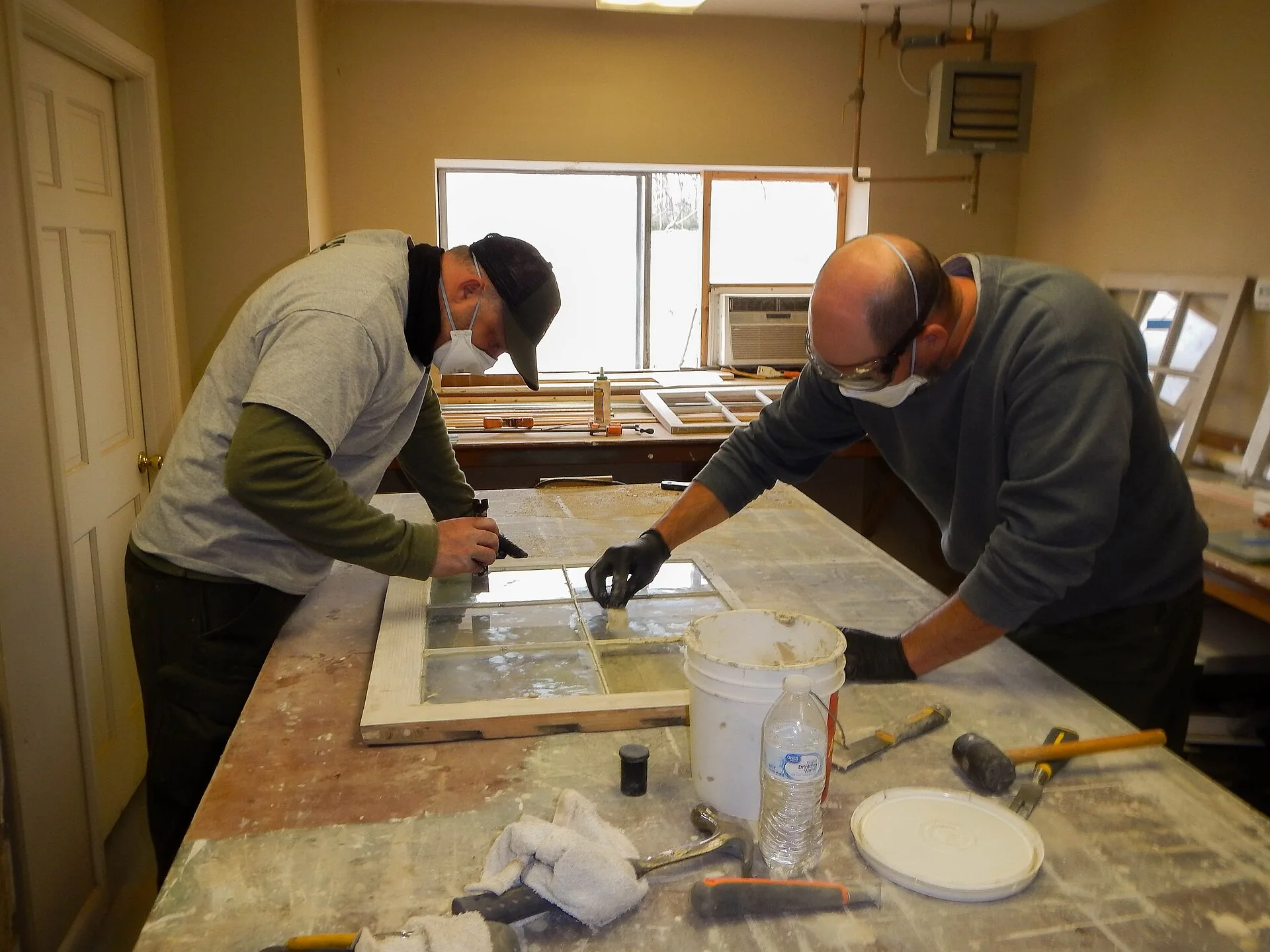
Clear the area, move furniture, set up access, provide power and water, and protect adjacent surfaces; none requires craft skill, and all is billable if the crew does it. Then arrange parking and handle disposal.
Agree in advance exactly what you are responsible for, so nobody arrives to find the work not ready. Settle the permit question in the same conversation, because responsibility follows whoever pulls it. In a local historic district that usually means the historic district or preservation commission and a certificate of appropriateness before work starts; anything touching state or federal programs runs through your State Historic Preservation Office.
The map of which trade a job actually needs is worth knowing before you call: masonry, joinery, slate roofing and metalwork are where preservation knowledge matters most, and a rundown of the trades is a useful starting point.