Rules
Part of Original wood windows compared for value, comfort and long-term fit
Original wood windows rules: what to ask locally
Original wood windows rules: questions for your building department about permits, district review, egress, energy codes and lead safety.
What to take away
- Window changes are the single most commonly reviewed exterior alteration in local historic districts.
- Original wood windows rules vary by jurisdictionwhether a permit is needed for replacement, and whether egress or energy provisions apply, depend on your adopted code and your scope. Ask the building department.
- Work disturbing paint in pre-1978 housing carries federal lead-safe requirements for firms paid to do it. Ask for the certification.
- Repair of existing sash usually raises far fewer regulatory questions than replacement does.
Windows sit at the intersection of appearance, safety and energy rules, which is why they generate more review than almost any other component of an old house.
Why districts care about windows
A window opening defines rhythm, proportion and depth on a facade. Change the sight lines, the muntin width, the glass reflectivity or the setback in the reveal, and the elevation reads differently from the street even when the opening size is unchanged. So local commissions look closely.
The federal preservation benchmark is the Secretary of the Interior's Standards for Rehabilitation. Standard 6 favors repairing historic features and allows replacement when deterioration warrants it, with the new feature matching the old. The Standards do not automatically govern every privately owned house; a local ordinance or applicable state or federal review may make them relevant. For repair guidance, see National Park Service Preservation Brief 9, The Repair of Historic Wooden Windows.
The National Park Service guidance on replacement windows that meet the Standards says how accurate a match must be depends on how important the window is to the building's character. A street-facing facade is usually treated more strictly than an obscured rear elevation.
Questions to put to local officials
- Does replacing existing windows in kind require a permit here?
- Which edition of the International Existing Building Code (IEBC), International Residential Code (IRC), or International Building Code (IBC) has the jurisdiction adopted, and which existing-building provisions apply to this project?
- Do the IRC's R310 emergency escape and rescue opening requirements apply to this scope of work, and if so, to which rooms?
- Which edition of the International Energy Conservation Code (IECC) or state energy code applies, and what specific historic-building exception, if any, covers this project?
- Does the adopted safety-glazing code apply in any of these locations—for example, IRC R308.4?
- Does the local historic district commission or preservation commission require a Certificate of Appropriateness (COA), Certificate of Approval, or other approval before work starts? Which application should I submit?
- Does this project require review by the state historic preservation office (SHPO), such as because of state or federal involvement?
Ask them as written questions and keep the written answers. Requirements vary between jurisdictions and between editions, so a neighbor's experience is not evidence about your project. Those answers belong in the same file as the bids, permits and receipts, which is the record set worth building from the first day of a project.
Where the two reviews collide
| Situation | Likely path |
|---|---|
| Repairing existing sash in place | Usually simplest, minimal review |
| Replacing sash with a close match | Permit possible, district review likely |
| Changing an opening size for egress | Permit, structural detail, district review |
| Adding exterior storm windows | Often no permit, district may review appearance |
| Adding interior storm panels | Usually neither, since nothing is visible outside |
A recurring frustration is a proposed change accepted by one office and refused by the other. Get both answers before ordering anything.
Reviewers also check the specification and the elevation. The National Park Service's Technical Preservation Services Information Sheet 23, selecting replacement windows, covers the details that decide whether a proposed unit reads correctly.
Sash thickness, muntin profile and depth, the meeting rail, and how far the glass sits back from the wall face all matter. Bring that detail to a hearing and the conversation gets shorter.
Lead, and why windows are the worst case
Painted window components generate more lead dust than any other part of a house, because the sash abrades against the jamb every time it moves. For covered renovation work disturbing lead-based paint in pre-1978 housing, the EPA Renovation, Repair and Painting (RRP) Rule, 40 CFR Part 745, generally requires the hired firm to be certified as a Lead-Safe Certified Firm and the work to be overseen by a certified renovator. Ask whether the rule applies, request the firm's certification, and get the EPA's Renovate Right pamphlet before covered work begins. EPA or an EPA-authorized state lead program administers the requirements; confirm which program applies where you live.
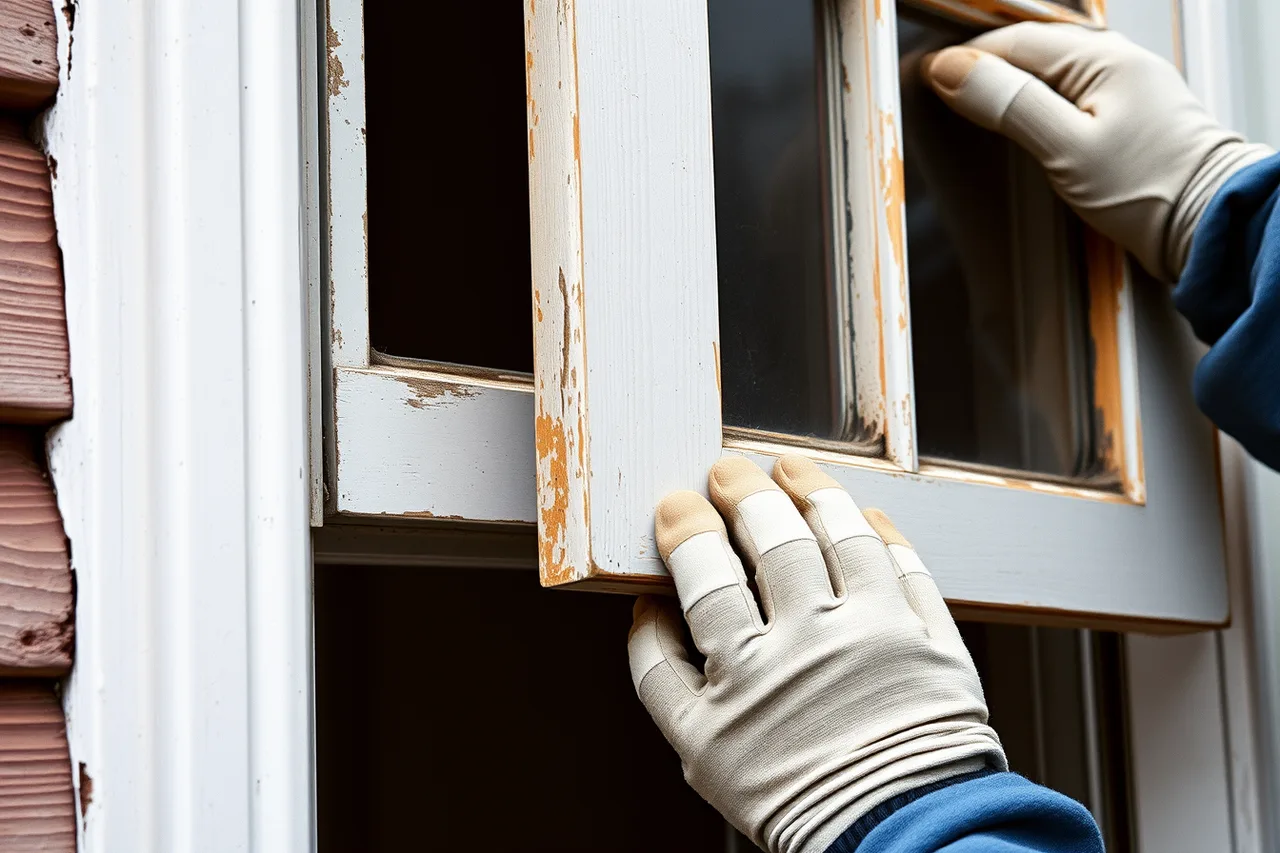
For your own work, test first and use methods that do not create dust. For hired work covered by the RRP Rule, confirm the firm's certification and a sample repair, and ask for a measured drawing of an existing sash; these are among the checks worth making before a sash contractor starts.
Reading across to the rest of the house
The general permit picture is set out in how permits and local codes affect old house projects, and the underlying repair-or-replace comparison is in our window options compared.